Real West
Real West Gallery
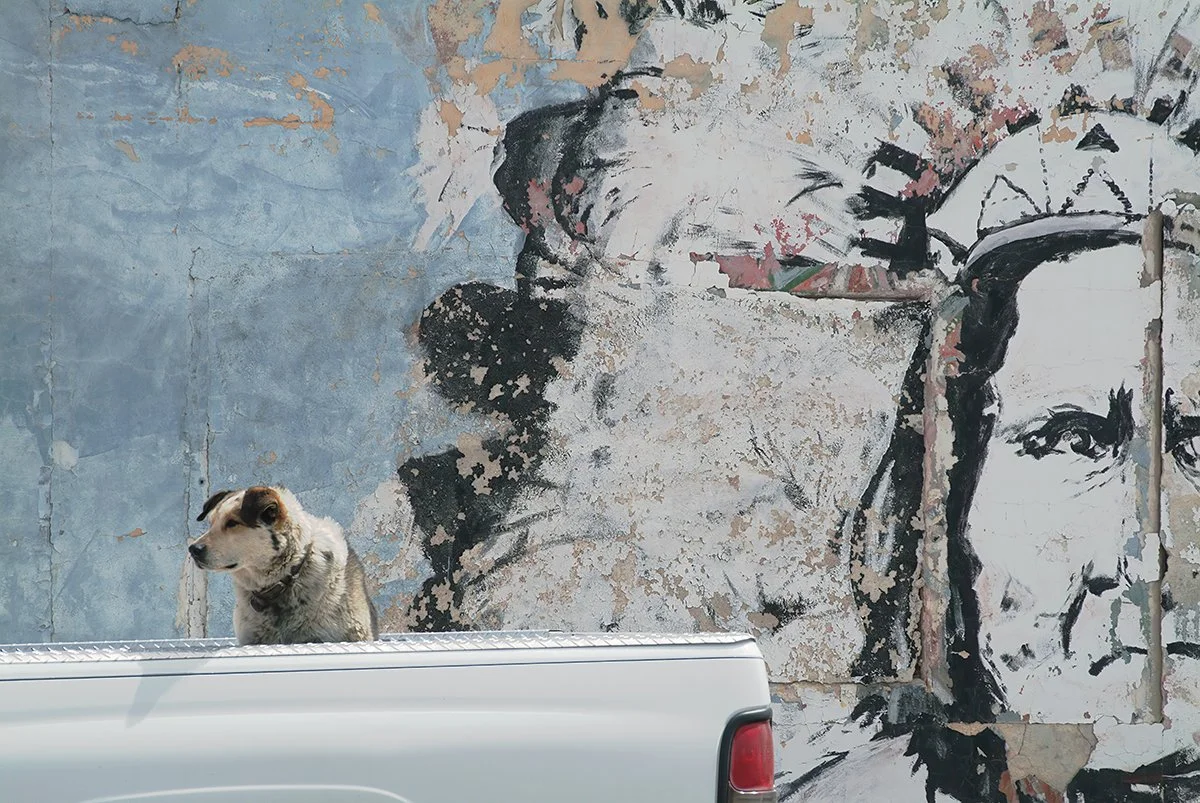
The romantic idea of the Western United States has long captivated artists. The images in Roland Miller’s Real West aim to explore and understand the current state of the American West. The title of this project references the idea that there is no true "real” West, only a revered view. By juxtaposing romanticized Western iconography and themes with contemporary scenes, Miller seeks to deconstruct the idealized image of the American West.
Photography has played a key role in spreading a sentimentalized image of Western life. After challenging the romantic heroism of warfare by depicting the violence and aftermath of battles, Civil War photographers Alexander Gardner and Timothy O’Sullivan helped shape the idealized vision of the West through their expedition photography. Other photographers, including Adam Clark Vroman and Edward S. Curtis, documented Native American cultures of the West—often altering the accuracy of attire and accessories in their photos to add interest. In the 20th century, popular culture and media promoted the image of the rugged, independent cowboy. Symbolized by the “Marlboro Man,” the Western cowboy was more than a symbol of freedom and rugged individualism—it also influenced conservative ideas and political views on issues such as racial equality, feminism, and individual rights. More recently, photographers such as William Allard have documented the fading cowboy lifestyle in a style that preserves this revered view of the West.
Over the past fifty years, urbanization, industrialization, population growth, improved transportation, increased recreational demand, growing environmental concerns, and other societal factors have dramatically reshaped the West. At the same time, the political influence wielded by industry and ranching in the region has remained largely unchanged. These conflicting pressures are reshaping the remnants of the Western legend.
Miller’s aim with the Real West project is to explore and analyze the lifestyles, values, and conflicts that arise from these changes. Over time, the project has broadened to include climate change, the mistreatment of Indigenous peoples, public land use, environmental issues, water shortages, and energy development—factors that have shaped the evolution of the American West.